
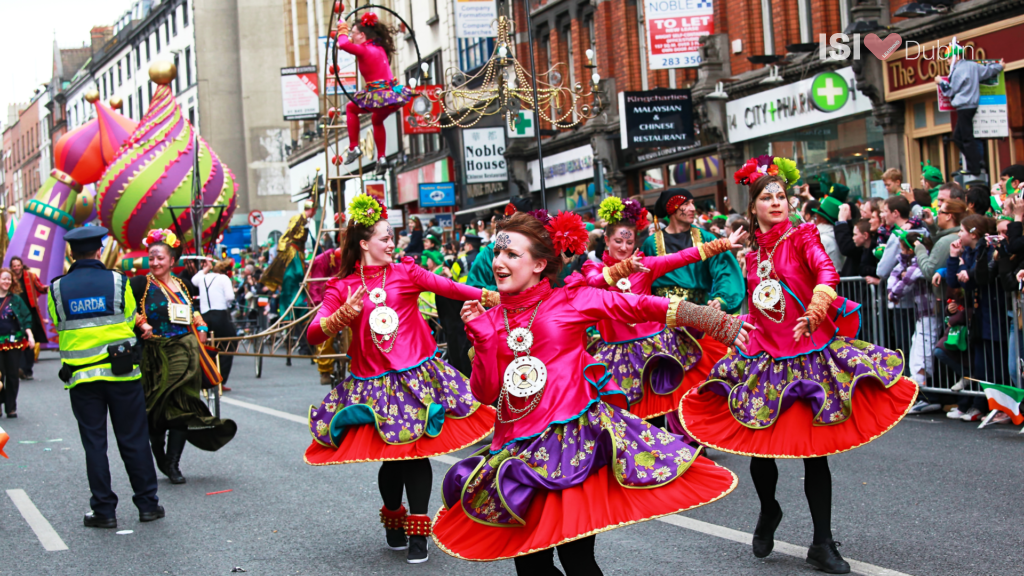
St. Patrick’s Day, celebrated every year on 17th March, is one of the most well-known festivals worldwide. While it’s often associated with wearing green, parades, and plenty of shamrocks, there’s much more to this day than just the fun and festivities. Let’s explore the origins of St. Patrick’s Day, its significance, and how it’s celebrated around the globe.
The Origins of St. Patrick’s Day
St. Patrick’s Day honours St. Patrick, the patron saint of Ireland, who is credited with bringing Christianity to Ireland in the 5th century. Born in Roman Britain (we think), St. Patrick was captured by Irish pirates as a teenager and brought to Ireland as a slave. After six years, he escaped, but returned years later as a missionary. St. Patrick used the three-leafed shamrock to explain the Christian Holy Trinity (Father, Son, and Holy Spirit) to the Irish, which is why the shamrock is so closely linked to the day, and why it’s a symbol of Ireland. St. Patrick died on 17th March, and this date has since become a day of remembrance and celebration of his life and work. Over time, St. Patrick’s Day became a religious observance, but it has evolved into a wider celebration of Irish culture.
The Meaning of St. Patrick’s Day
For many, St. Patrick’s Day is a time to reflect on Ireland’s rich history and the contributions of Irish culture to the world. It’s not just about wearing green and celebrating in the streets; it’s about acknowledging Ireland’s influence in areas such as literature, music, art, and even politics. The day serves as a reminder of the resilience and spirit of the Irish people, both within Ireland and across the globe. According to the St. Patrick’s Festival, which is the heart of the celebrations in Ireland, the day is an opportunity to showcase Irish culture, arts, and traditions, inviting people to engage with the country’s history and its modern-day creativity. The festival is a symbol of national pride and a celebration of Ireland’s impact on the world stage.
Global Celebrations of St. Patrick’s Day
Although St. Patrick’s Day has its roots in Ireland, it has grown to become a global celebration of Irish heritage, with events taking place in cities around the world. Parades, festivals, and parties are held in places as far-flung as New York, Sydney, Tokyo, Rio de Janeiro, and Buenos Aires. In fact, the St. Patrick’s Festival in Dublin is one of the biggest celebrations, attracting over a million visitors each year. The festival features a wide range of cultural events, from street performances and concerts to theatre and dance, offering something for everyone. In the United States, St. Patrick’s Day is widely celebrated, with the Chicago River famously being dyed green each year. In New York City, one of the largest parades in the world takes place, with thousands of marchers, bands, and floats. While these celebrations may not always have religious significance, they are a vibrant display of Irish pride and a chance for people of Irish descent, or anyone who loves Irish culture, to come together.
A Day for Everyone
Although St. Patrick’s Day began as a religious observance, it has become a day for everyone to enjoy, regardless of their background. People from all over the world join in the celebrations, whether by attending parades, dressing in green, or enjoying traditional Irish food and drink. The day has grown into an international celebration of joy, unity, and culture. Whether you’re Irish or not, St. Patrick’s Day is an occasion to embrace Irish culture, reflect on history, and join in the fun. From the streets of Dublin to the corners of the globe, it’s a day that brings people together, united by a shared appreciation of Ireland.
 English
  Chinese (China)
  Chinese (Taiwan)
  French
  German
  Italian
  Japanese
  Korean
  Mongolian
  Polish
  Portuguese
  Russian
  Spanish
  Turkish
  Ukrainian
  Thai
Thai  Latvian
  Lithuanian