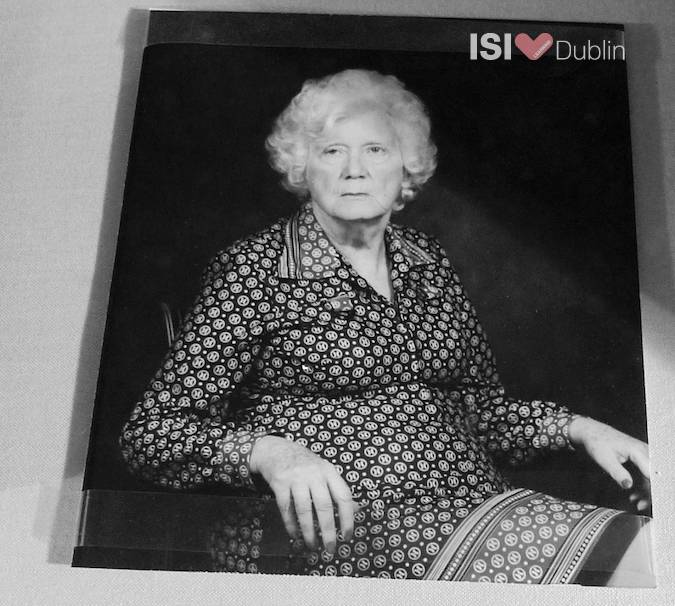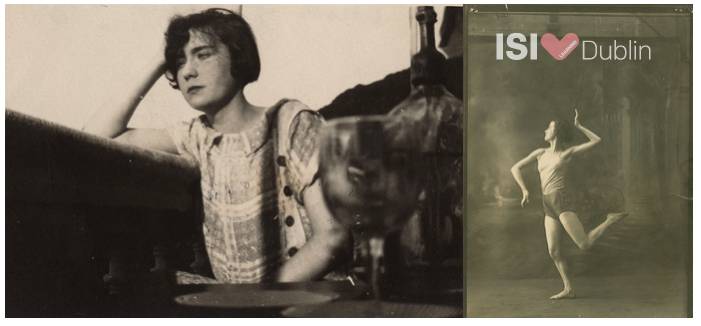

Here at ISI Dublin, we pride ourselves on having — over and above all of the English Language Schools in Ireland — a deep and meaningful connection to the Irish writer James Joyce. Not only did Joyce regard the Chapter House adjoining our Meeting House Lane campus as “the most historic spot in all Dublin,” but he himself was educated at Belvedere College, the prestigious inner-city school that hosts our Summer Camp for Teenagers. Universally acclaimed as one of the most influential writers of the 20th century, Joyce is most famous for his novel Ulysses (1922), in which he makes the above, remarkable reference to our Meeting House Lane campus. However, in unearthing Joyce’s influences through this series of blogposts, we would rather not merely focus on Ulysses, as we have done in the past, but extend our academic reach to his early childhood, and from there to that of his own children, in particular his daughter Lucia — who would become an abiding influence on his last and undisputedly most baffling work, Finnegans Wake (1939).
III:I Anna Lucia Joyce . . . the dotter of her father’s eyes
As mentioned in the previous post in this series, ISI and James Joyce: Influences II — Astraphobia, Lucia Joyce was born in Trieste, Italy, on July 26 1907. She was preceded by a son, Giorgio, and as such was the second of Joyce’s children with lifelong companion, and eventual wife, Nora Barnacle. Fearing blindness at the time, Joyce is alleged to have “named the child Lucia Anna after the patron saint of eyes. He was possibly also thinking of Saint Lucia’s role as illuminator and messenger in Dante’s Inferno (“Lucia” in Italian literally means “light”). The baby was registered erroneously as Anna Lucia. Much later, Joyce would choose the name Anna Livia for the female character in Finnegans Wake” (Gabrielle Carey, James Joyce A Life [Melbourne and Galway: Arden Press, 2023], 43).
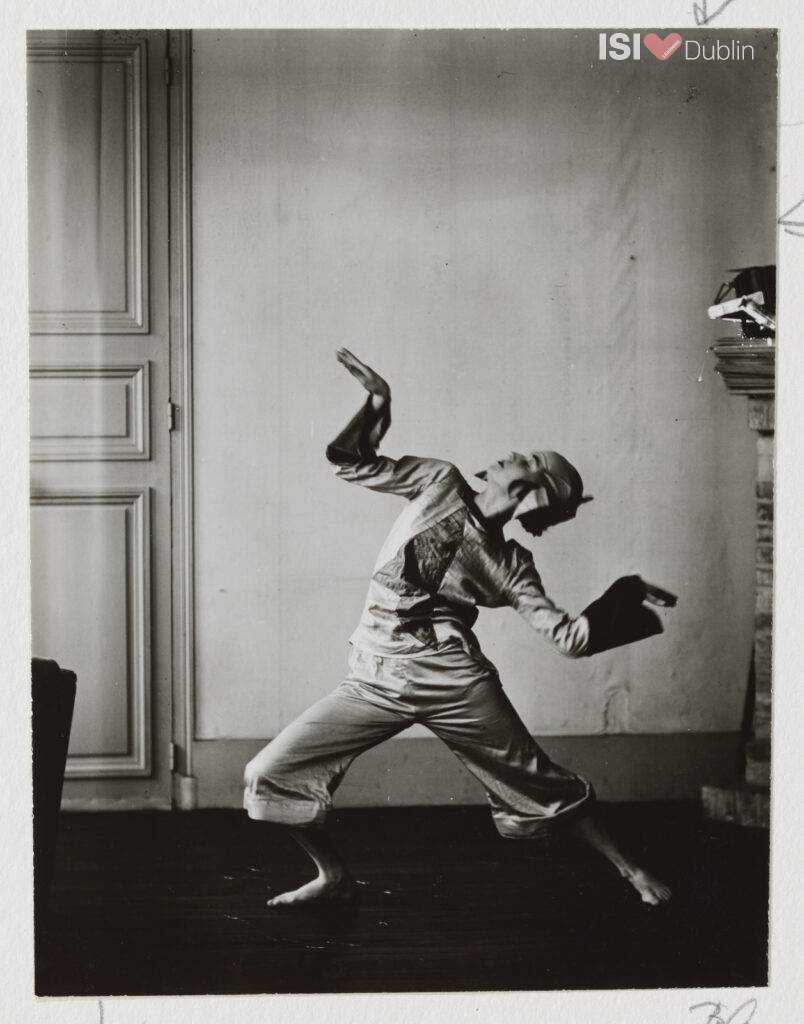
As also mentioned in the previous post in this series, Lucia began training as a professional dancer from a very young age. Hailed as a talented ballerina and choreographer, she studied at several noteworthy academies and worked with some of the most experimental and avant-garde groups in early 20th century Europe. Following a 1928 performance in La Princesse Primitive at the Vieux-Colombier theatre, the Paris Times wrote of her: “Lucia Joyce is her father’s daughter. She has James Joyce’s enthusiasm, energy, and a not-yet-determined amount of his genius. When she reaches her full capacity for rhythmic dancing, James Joyce may yet be known as his daughter’s father” (Carol Schloss [2003] Lucia Joyce: To Dance in the Wake). In James Joyce A Life (2023), Gabrielle Carey relays how “[i]n May 1929, Lucia was a finalist at the first Paris international festival of dance. She wore a shimmering silver fish costume covered in scales that she had designed herself. Afterwards one of the judges noted that the young Irlandaise was the only contestant with the potential to be a professional dancer. . . . Lucia’s pursuit of physical expression on stage had mixed family support and by October 1929 she had decided, with Joyce’s approval, to give up dancing as a professional pursuit. . . . This sacrifice of Lucia’s artistic passion appears to be the beginning of her descent into mental instability” (91-93).
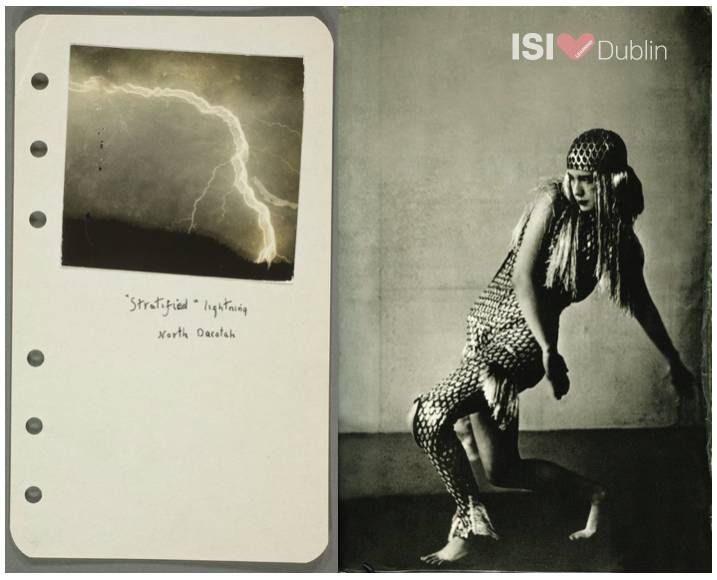
III.II A Bolt from the Blue . . . Lightning Becomes Lucia
Having begun to display neurotic traits from a very young age, Lucia’s unpredictable behaviour reached an apogee in the 1930s: a period of time during which she gave up dancing professionally and became amorously involved with her father’s apprentice, Samuel Beckett — then junior lecturer in English at the Ecole normal supérieure in Paris. In May of 1930, while her parents were away in Zurich, Lucia invited Beckett to dinner in the hope of pressing him “into some kind of declaration,” but Beckett irmly and unequivocally rejected her, stating that he was only interested in her father and his writing.
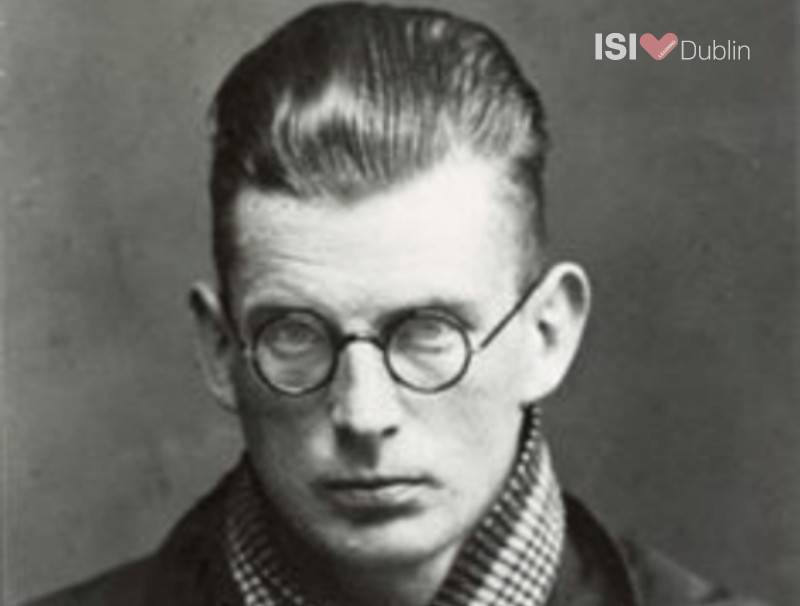
“Lucia reportedly ‘lapsed into a catatonic state.’ Later she was to comment that the men who came to their home treated her like a[n] ‘hors d’oeuvre’ (Frank McNally, “Her father’s daughter — An Irishman’s Diary about the tragic life of Lucia Joyce,” The Irish Times [Sat June 16 2018]). For his part, Beckett would later confess to his lover Peggy Guggenheim that he “had no feelings that were human and this is why he had not been able to fall in love with Joyce’s daughter” (Carey, James Joyce A Life, 95). Others, amongst Joyce’s biographers, believe “that when […] Beckett rejected Lucia’s romantic advances in 1930, it was in part because he thought there was a ‘strong unfulfilled erotic bond’ between her and her father, . . .” (McNally, “Her father’s daughter). This would certainly tarry with accusations of jealousy later levelled at her mother, Nora, who even Joyce admitted, when pressed, harboured envious feelings towards their daughter (Annabel Abbs, “Nora and Lucia Joyce: what sort of mother abandons their daughter?,” The Irish Times [Tue July 26 2016]).
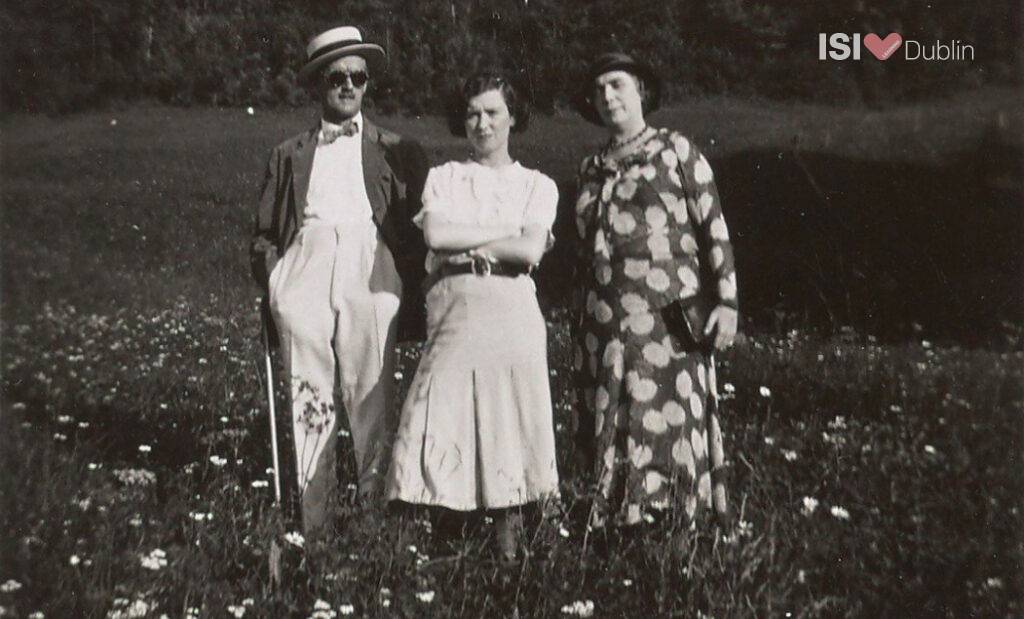
Further rejections followed in the same year, and from this unfortunate streak of events, Lucia allegedly emerged a mad, violent, and abject individual. The incident that was to seal her fate, so to speak, occurred on her father’s fiftieth birthday, Candlemas/Groundhog Day 1932, when Lucia threw a chair at her mother, after which her older brother, Giorgio, admitted her to a psychiatric institute, euphemistically termed a maison de santé in those days. Tragically, it seems to have been Beckett who was behind the incident: he had been invited to Joyce’s birthday party, not unsurprisingly, but given his recent rejection of her, Lucia felt that this was a personal betrayal, presumably by her mother — who no doubt handled the party invitations, as was a wife’s wont in those days.
In any case, between 1932 and 1936, Lucia was in and out of similar maison de santés, while her father, against the advice not only of Nora and Giorgio, but of friends, relatives, and numerous doctors, either denied her illness altogether or tottered from cure to cure, then on offer; ultimately to little effect, notwithstanding a huge expenditure of Joyce’s funds — the extent of which can be garnered from a letter to his benefactor, Harriet Weaver, imploring aid with expenses for the care of Lucia, in which he says: “if you have ruined yourself for me … why will you blame me if I ruin myself for my daughter” (James Joyce [1882-1941] — Life 3 [1936]). In James Joyce A Life (111-113), Carey relays:
Following years of rejecting the suggestion of psychoanalysis for Lucia, in 1934 Joyce finally relented to consulting the famous Swiss doctor, Carl Jung. Jung was Lucia’s twentieth doctor. One of the reasons Joyce had resisted consulting Jung was because of the psychiatrist’s public comments about Ulysses . . . Joyce’s response was:
He seems to have read Ulysses from first to last without a smile. The only thing to do in such a case is to change one’s drink.
A friend remarked that the reason Carl Jung was so rude about Joyce was because Joyce’s name translated into German as freude.
Joyce continued to insist that the problem with Lucia was that she was an innovator who was not yet understood. He commented to a friend:
People talk of my influence on my daughter but what about her influence on me? . . . She is a fantastic being who speaks a curious abbreviated language of her own . . . I understand it, or most of it.
It has been hypothesised that this curious language inspired the curious language of Finnegans Wake.
III:III . . . Lucia Becomes Lightning
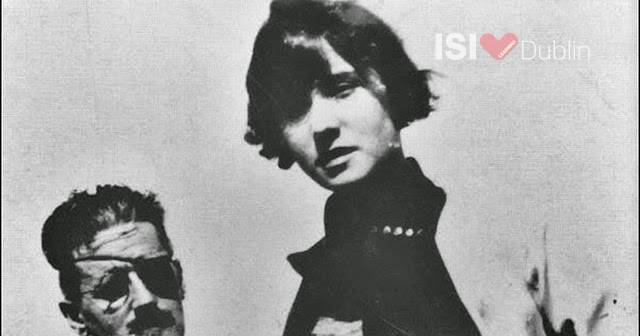
Throughout this period Joyce was writing “Work in Progress,” which would eventually become his last novel, Finnegans Wake — a book many biographers believe was inspired, with both trepidation and elucidation, by Lucia herself . . . Lucia, the dotter of her father’s eyes, whose mind was “as clear and as unsparing as the lightning” (Joyce to Harriet weaver Shaw, Letters I, 366). As Gabrielle Carey notes in James Joyce A Life (116-18):
Joyce believed his genius had cast a shadow on Lucia’s pysche, concluding:
Whatever spark of gift I possess has been transmitted to Lucia and kindled a fire in her brain.
He wrote regularly to his daughter during her incarcerations in various institutions, usually in Italian :
Cara Lucia:
I feel more than ever, my poor, dear and good, Lucia, that the long night of your travails is drawing to an end and that the dawn is coming.
Joyce’s mood in the face of his daughter’s condition belied his words. His friends observed that he seemed to be in complete despair and prone to “lachrymose fits.”
Three-quarters of Joyce’s income was now going to Lucia’s care and he was at risk of financial ruin. When Joyce’s sister in Ireland wrote to him offering lottery tickets as a way of alleviating his financial stress, he responded:
I am not interested in Irish sweepstake tickets. The only decent people I ever saw at a racecourse were the horses.
Finnegans Wake is often described as a book written in dream language. For a long time the dreaming narrator was believed to be Humphrey Chimpden Earwicker.
Consistent with the madness theme of the Wake, the name Earwicker suggests the earwig, an insect which was so named because it was believed it could burrow into the brain of a sleeping person and cause insanity.
Of madness, Joyce once commented to his friend, painter and art critic Arthur Power:
Madness you may call it . . . I prefer the word exaltation, exaltation which can merge into madness, perhaps. In fact all great men have had that vein in them; it was the source of their greatness; the reasonable man achieves nothing.
III:IV . . . The Subtle Border Between Madness And Genius
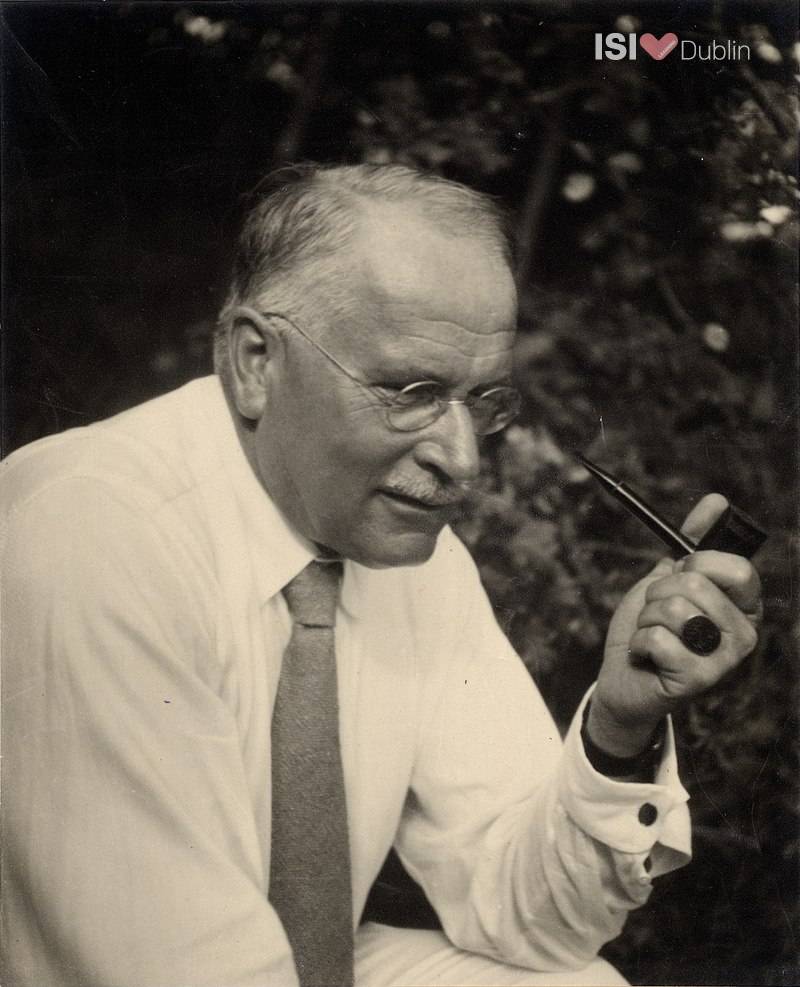
In 1934, when Jung had been briefly treating Lucia, Joyce asked the Swiss doctor: “Doctor Jung, have you noticed that my daughter seems to be submerged in the same waters as me?” To which Jung responded: “Yes, but where you swim, she drowns.” Jung’s intuition that Lucia’s suffering reflected a similar latent disposition in her father was later echoed by the French psychoanalyst Jacques Lacan, who suggested Joyce’s writing was the auxiliary cord that kept him from madness (see Jacques Lacan, Ecrits (Paris, Le Seuil, 1966), 531–583).
Following an increasingly “mad” couple of years in Lucia’s life, in which Joyce persisted in refusing to have her certified, she was diagnosed with schizophrenia at Burghölzli Psychiatric Clinic in Zurich. In 1936, she was removed from home in a straight-jacket to le Vésinet and declared to be dangerous. Later that year, she was moved to the maison de santé of Dr. François Achille Delmas at Ivry-sur-Seine, where she would remain until 1951, when she was transferred to St. Andrew’s Hospital in Northampton, England. She died there at the age of 75, in 1982.
In an interview, Jung once said that Lucia was Joyce’s “anima inspiratrix” (the inspirational female form of his soul): “If you know anything of my Anima theory,” he is alleged to have said, “Joyce and his daughter are a classical example of it. She was definitely his ʻfemme inspiratice,ʼ” which explains his obstinate reluctance to have her certified (see E. Coleman, “A note on Joyce and Jung,” James Joyce Quarterly, 1963; 1:11–16).
III.V . . . Where flash becomes word

In the Book of Job 36:32, we read: “He covers His hands with lightning, and commands it to strike the mark.” The subsequent verse adds: “Its noise declares His presence.” This is an uncannily accurate portrayal of the relationship between thunder and lightning for a text that dates to the 6th century BCE, given that much weather-lore dating to the same period — see, for instance, Anaximander — suggests lightning is an adjunct to the thunderclap rather than its determining factor. This is a, granted, small but by no means insignificant detail when approaching James Joyce’s Finnegans Wake, where the thunderclap, apropos of the thunderword —
bababadalgharaghtakamminarronnkonnbronntonnerronntuonnthunntrovarrhounawnskawntoohoohoordenenthurnuk!
— announces itself on the very first page, of a work, in which, to quote Finn Fordham, “[o]rigins are notoriously obscure . . . [and] [w]e are unable to understand neither what happened first nor what, in the beginning, was thought, conceived, or made . . .”
In Fordham’s dazzling “Lightning Becomes Electra: Violence, Inspiration, and Lucia Joyce in ‘Finnegans Wake’” (in James Joyce Quarterly, Vol. 39, No. 4 [Summer, 2002]: 655-678; 669), he holds steadfast to the fulminological fact that, as Martin A. Uman relays in Understanding Lightning (London: Oak Tree Press, 1971, 44), “[l]ightning causes thunder . . . Thunder is a pressure variation induced in the air by the expansion of each part of the lightning channel due to its initial high pressure.”. His point:
Lightning seems to reveal everything, a quasi-apprehension of God, as we see through the all-seeing divine glance, but the revelation is all too brief for the eye of reason. Away from the rationalist interpretations that painstakingly unfold Joyce’s crumpled language, “lightning” readings are still possible, intuitive, and revelatory. Such readings give insight into the dark work and the dark world and seem, like the best of ideas, to come to one in a flash. Joyce pleads, in the “Nightlessons,” for inspiration, for light in the darkness, for the illuminations of genius from his muse, from the light of his own daughter: “Belisha beacon, beckon bright! Usherette, enmesh us! . . . Where flash becomes word” (FW 267.12-16). He wants to bring light to the place where the inspirational stroke of genius becomes the creative act of writing, where thought becomes language, where Lucia is translated into the text as Issy, “be-lisha.” . . . The sudden flash of lightning is contingent on the original realization of the fall: it is the flash of light as the eye opens itself on a new day or a new life, signalling a fall into the “visible-gnosible-edible world” (FW 88.06); it is the light that signals the fall of Lucifer, the fall of man . . . The [very] words that precede the first thunderclap in Finnegans Wake are “[t]he fall” (FW 3.15). Through their position, brevity, relative clarity, and unexpectedness, they stand in for the sudden lightning, producing the Babelian rumble that follows. As the words fall and strike the page, they leave a mark, a negative illumination.
Another remarkable feature of the passage from Job above is the imagery evoked in striking the mark, as if lightning were, to quote Fordham, “God’s ‘bullet’”, “having a ‘bolt’ within it” (“Lightning Becomes Electra,” 677). While the earliest evidence of the compound noun “lightning bolt” dates to the 16th century CE (Oxford English Dictionary), ancient people, not knowing that lightning was electricity, believed these material artefacts actually existed and were to be found as “fool’s gold embedded in chalk” or as fragments of fulgurite — the glassy scar left by lightning when it strikes and melts rock. Thought to be tangible evidence of “God’s air-to-surface war with the world” (“Lightning Becomes Electra,” 677), these lightning bolts were treasured for the protective power they bestowed upon the possessor, based on the erroneous belief that lightning never strikes the same place twice. As such, the possessor of such an amulet could conceivably “ward-off” God’s wrath.
There is another more ameliorative Christian reading of Job’s passage above that persists, in which lightning “strikes the mark” just as God-directed intercessionary prayer does. In this reading, one’s prayers of intercession release the flashing forth of God’s lightning and direct it to strike the specific target of need. In short, according to one Christian website, “[d]uring intercession, God lights upon the person praying and moves them from the natural to the supernatural . . .” through a sudden flash of illumination, clarification, and inspiration in which the thinker/writer — otherwise in a tellibly divilcult and torporous situation — becomes “a priest of the eternal imagination, transmuting the daily bread of experience into the radiant body of everliving life” (James Joyce, A Portrait of the Artist as a Young Man [London and New York: Penguin Classics, 2000], 240). Both of these readings co-exist in III.3 of Finnegans Wake, where, as Fordham relays (“Lightning Becomes Electra,” 677), Shaun, as Yawn, possesses a bolt of lightning:
Suspected by the chief interrogator of harbouring the wicked Shem, Yawn fears the all-seeing glare of the judge. He protests and swears by his “bolt” that he has evidence against it: “Nwo, nwo! This bolt in hand be my worder (FW 483.15-16, JJA 62.354). The bolt is his warder, which guards him against being struck, but is also literally his “worder,” a rare word meaning “one [that] puts into words,” according to the Oxford English Dictionary. Shaun, true to his military inclinations, communicates and defends himself through his weapon. Yet, if this weapon is a pen, “one [that] puts into words,” then he does have “Shem the Penman” in hand and, despite his protests, is, in fact, his brother’s keeper.
III.VI . . . From one brother’s keeper to another, René Char and Georges Bataille
In 1925, Joyce wrote to his benefactor Harriet Weaver stating he had “declared war on language and [would] go on jusqu’au bout [‘until the end’]” (Letters I 327). Between 1925 and 1939, however, Joyce twisted his intentions; as Fordham notes (“Lightning Becomes Electra,” 667) — in the Wake, we find the war is not on, but rather within, words (“[t]he war is in words” [FW 1.4]):
In Joyce’s war of the words, the effects of violent language or of violence against language are harder to quantify than the effects of hurtling matter in wars of the world. Writing, though it may pack a punch, can never predict its immediate effects as one can predict those of a bullet. Writing is a refuge, not from violence or from transformational outcomes, but from predictability. Like lightning, when it begins its journey, writing does not know where it will strike or whether its effects will be devastating or inconsequential.
“To write is to research chance,” as Joyce’s Parisian contemporary Georges Bataille once noted. Seeking to further strengthen this analogy, Fordham draws on Thomas Pynchon’s war-time novel Gravity’s Rainbow (1973), in which the principle protagonist, one Tyrone Slothrop, is an American soldier working for allied intelligence in London during World War II. Tasked with “trying to figure out where the V2s [German V-2 rockets] will fall,” Fordham suggests Slothrop “is analogously analysing the unquantifiable and unforeseeable effects of Art and its lightning strikes” (“Lightning Becomes Electra,” 668). Not having read this fictional novel by one of Joyce’s so-called “descendants,” a “lightning” reading of his work — which is not only on all accounts “possible, intuitive, and revelatory,” but in line with this military setting — is to be found in René Char’s war-time poem “The Library is on Fire.”
Based on fact rather than fiction, the library is on fire were code words for a parachute drop to the Céreste maquis of the French resistance during World War II: words which took on a mysterious life of their own when one of the containers from the drop randomly blew-up and set fire to a forest, alerting the Gestapo to the whereabouts of Char’s group. Having barely escaped with their lives, Char — code name (nom de guerre): Capitaine Alexandre — believed the fire was proof of the power language has to shape and determine our world: “‘I believe in the magic and the authority of words,’ he told his superiors in London, insisting the code be changed” (see “Editorial,” to René Char, Poems, 3.2., Winter 2004). Sceptical, to say the least, about the political and personal motives of most “Resistance” poetry, these code words provided the title to a poem Char would not publish until after the war, one in which he addresses the question of his literary origin(s):
How did writing come to me? Like bird’s down on my window-pane, in winter. Just then there rose in the hearth a struggle of fire-brands, which has, still now, not ended. . .
Everything in us ought to be a joyous feast when something we haven’t predicted, that we don’t shed any light on, that will speak directly to our heart, comes about. . . .
Lightning lasts me.
— René Char, “The Library is on Fire”
 English
  Chinese (China)
  Chinese (Taiwan)
  French
  German
  Italian
  Japanese
  Korean
  Mongolian
  Polish
  Portuguese
  Russian
  Spanish
  Turkish
  Ukrainian
  Thai
Thai  Latvian
  Lithuanian